
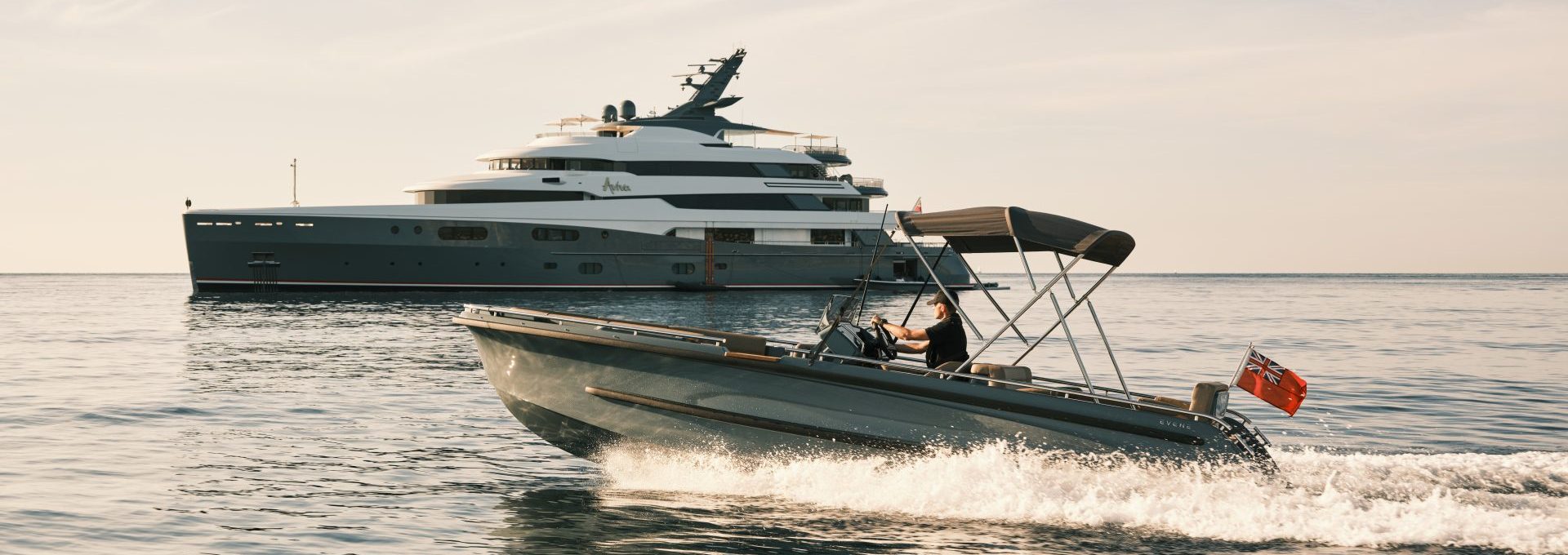
For years, the standard for a superyacht tender was simple: keep the guests dry, look sleek, fit wherever it needs to go onboard and match the mothership’s paint code.
But as more and more yachts move away from the typical yacht havens toward the Higher Latitudes or Remote Tropical & Southern Frontiers.
The traditional guest luxury of a limo tender doesn’t mean much in these types of environments. For captains and crew, the shift toward exploration has turned the tender from the typical guest taxi for stylish pick ups and drop offs into a critical asset. When you’re operating in remote areas, a tender that can’t handle a beach landing or some heavy weather isn’t just an inconvenience—it’s a liability.
Modern explorer tenders are moving toward utilitarian luxury. We see that the”sweet spot” has shifted to the (35–45ft) range. Operational logistics are being reshaped. Manufacturers are building for rugged reliability, we are seeing a surge in “specialised” hulls and fit outs.
Perhaps the biggest shift is in fuel management. While petrol outboards offer high-speed thrills, many explorer captains require diesel-powered inboards. The reason is simple: the ability to “bunker” directly from the mothership’s tanks in remote regions like Antarctica or the South Pacific, where high-octane petrol is often non-existent and logistics are a nightmare.
The Bottom Line
The best tender is the one with enhanced seakeeping and stability, offers guest protection from the elements, versatile deck layouts and an accessible engine bay for any repairs. When you are operating in remote areas traditional guest luxury takes a back seat to a tender that actually works and operates reliably and safely in these harsher evironment.